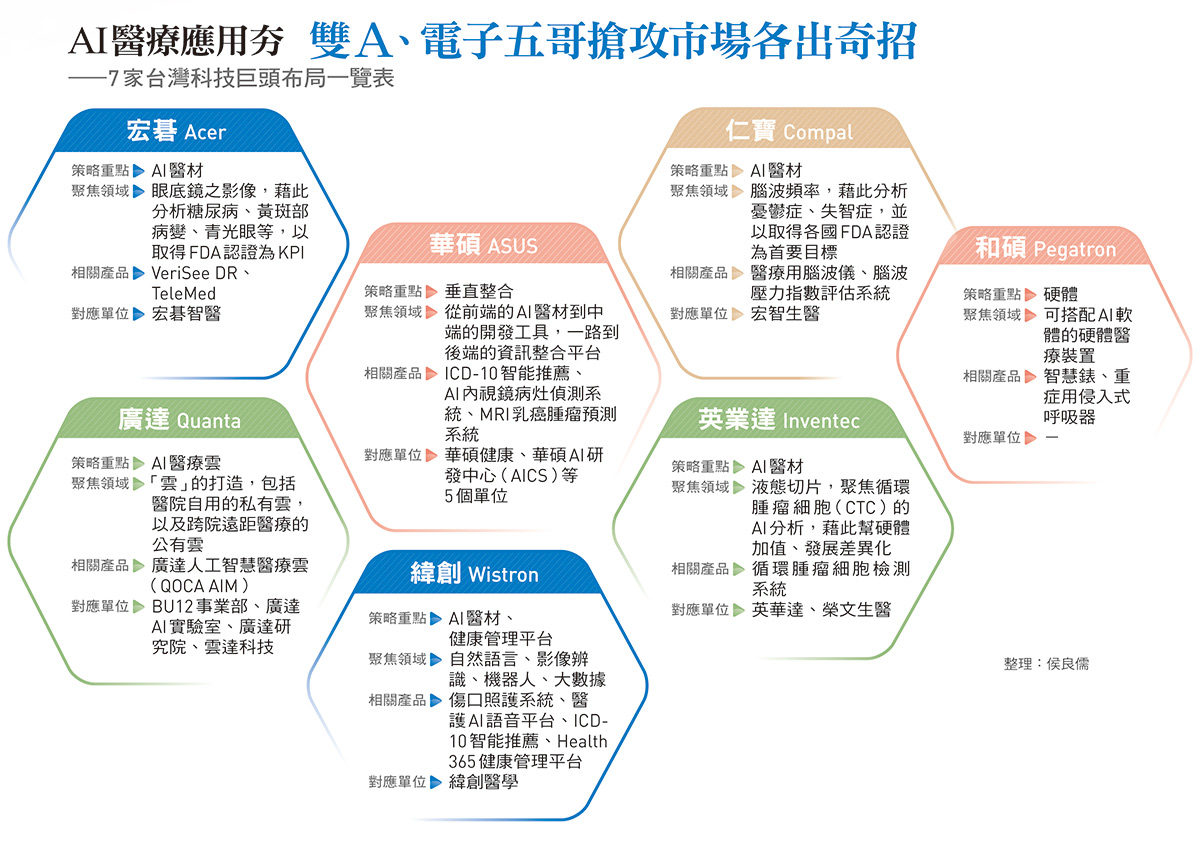
The reason why the smart medical industry attracts so much attention is that Taiwan's information communications and medical industries are both fields that are proud of the world. The "strong alliance" is naturally arousing expectations. Taiwan's electronics giants are competing to jump into the fray. After more than three years of exploration, they have each developed different strategies. Who is the current leader?
In 2018, the ophthalmic AI software "IDx-DR" developed by the US startup IDx won the first AI medical software certificate from the US Food and Drug Administration (FDA) and the world's first AI medical software certificate, marking the beginning of "certified" AI medical care. However, in 2000, Taiwan also issued the first license for ophthalmic smart medical materials, and the company that obtained this certificate was "Acer Smart Doctor", which is part of the Acer Group.
Acer has the most abundant medical evidence collection
ophthalmic AI software launched in Southeast Asia and received certification from three countries.
At present, Acer's ophthalmology AI software "VeriSee DR" and another telemedicine software have obtained two certifications from the Taiwan Food and Drug Administration (TFDA). Not only that, VeriSee DR has also obtained FDA certificates from Thailand, Indonesia, and the Philippines, making it the most prolific company in AI medical "certification" in Taiwan's electronics industry.
Why did Acer, which started out with desktop computers, laptops and other hardware, develop a software company with AI algorithms as its core competitiveness? This actually has a lot to do with Acer's "separation" 21 years ago.
In ○ 1 year, Acer started organizational restructuring and split the brand and OEM business. The former was operated by Acer, and the latter was undertaken by Wistron, which was established that year. At that time, although most of Acer's R&D personnel were assigned to Wistron, there were still more than 100 technical development talents who were sent to Acer's "Product Value Innovation Center" in Longtan, retaining the last trace of Acer's R&D incense.
This center, which was later moved to the Xizhi headquarters, and its “Forward-looking Technology Headquarters” responsible for software development, is the predecessor of Acer Intelligent Medicine. In 2016, artificial intelligence AlphaGo defeated the world chess champion, marking the arrival of the first year of AI. The team also plunged into AI and successively tried self-driving cars, robots, smart buildings, smart medical and other technologies. In 2018, the United States issued the first AI medical license, and they sensed the possibility of commercialization, and Acer Intelligent Medicine was established.
However, Acer Intelligent Medicine back then had actually been working with the National Taiwan University team for more than two years to develop a set of AI identification software focusing on retinopathy. Xu Yinxiong, general manager of the company, recalled that although both parties were dominant in technology and medical professions, it still took nearly four years to complete development and obtain certification when "no one had done it before."
The reason why it takes so long has something to do with both parties. On the hospital side, because National Taiwan University asked ophthalmologists to "support" this project outside of consultation time, Acer Intelligent Medical's engineers had to wait for the doctor's free time to "mark" the retinal image under the ophthalmoscope to determine whether it was a zero-level, first-level, second-level or fourth-level lesion before the data could be input into the AI model. "So we often asked the doctors to spend more time to read the data!" said Xu Yinxiong.
As for Acer, what took the longest at that time was that they had to "self-study" a lot of knowledge about retinopathy. The reason for this is to prevent the interpretation of certain lesions from being a special case of "only one doctor thinks so", which ultimately leads to algorithm bias. Therefore, Acer's software engineers must have relevant medical foundations so that they can have the most immediate dialogue and reconfirmation with doctors when special conditions are discovered.
It took more than three years for this software to finally pass certification in 2000, but another challenge was about to begin. Because every time a hospital is developed, Acer Intelligent Medical's personnel have to "receive" problems from different units of the hospital. For example: doctors are concerned about "is the software accurate?", information staff are curious about "can the AI software be integrated into our original system?", and procurement personnel ask Acer Intelligent Medical to propose different pricing methods for "buyout or lease?"
As of 2020, more than 50 medical institutions have purchased VeriSee DR from Acer Intelligent Medicine, 13 of which are medical centers. In 2021, the company's revenue reached nearly 10 million yuan, an increase of more than eight times compared with the previous year.
As its own business model of "development → evidence collection → promotion" becomes more and more proficient, Acer Intelligent Medicine will not only continue to develop independently in the future, but also plans to act as a "platform player" to commercialize the hospital's AI research results with commercial potential and promote them to the global market through the currently established hospital channels.
ASUS gave birth to another giant in the medical field
Collaborating with hospitals and Xinchuang to launch four major applications to enhance operations
Asus, which has been a "dead rival" with Acer in the laptop market for many years, has continued their past "giant lion strategy" in the motherboard market in the field of AI medical care - from front-end AI software development and medical speech recognition systems to middle-level AI development tools and computing power rental, all the way to the back-end, pursuing a medical information platform that can integrate data streams from different hospitals, like a lion opening its mouth, covering everything.
It is because of its ambition that Asus currently has five teams with more than 300 people working on the AI medical field. Some of them even have team backgrounds that had nothing to do with medical care in the past. For example, the "Endoscopic Lesion Detection System" launched by ASUS at the end of 2011 and currently applying for Taiwan's TFDA certification was developed by a team from ASUS's graphics card department.
In addition to the above-mentioned front-end AI medical materials, Tai Zhiyun, which was established by ASUS in 2011 and is responsible for operating the state-owned supercomputer "Taishan No. 2", acts as an "ammunition depot" to provide medical AI startups with the rental of GPU (graphics processing unit) computing power. "Many new startups do not have so many resources to purchase very high-end computers and expand computing power. Tizhi Cloud is their best support." said Wu Hanzhang, the company's trader and general manager of ASUS Health.
This business model is similar to the "AWS in the medical industry". In addition to the National Taiwan University Hospital, there are also several electronics companies that used to rank among the top five electronics companies with Asus, and even medical start-ups as far away as Singapore.
Currently, the largest of the five teams is the AI Research and Development Center (AICS), which is in its fourth year of establishment and has more than a hundred people. The team is currently developing an ICD-10 (10th edition of the International Classification of Diseases) smart recommendation system that allows doctors to "speak" and the computer will automatically suggest the ICD-10 code to complete the health insurance payment declaration. So far, it has been adopted by 18 hospitals in Taiwan.
However, this recommendation system is still a "visible" AI application. Currently, the "Lumos Medical Big Data Platform" developed by ASUS AI Research Center seeks data exchange between different hospital systems, and can use AI to automatically read and manage medical records and reports, and provide real-time data on mutation trends, disease factors and other data.
This AI software, which focuses on back-end data integration and was developed in conjunction with the Hospital Affiliated to Sun Yat-Sen Medical University, is known within ASUS as the "information highway" in the medical field. Its purpose is to connect medical record data originally scattered in the "Health Information System (HIS)" of different hospitals to this unified platform for big data management and AI computing, solving the current problem of hospitals being unable to share data with each other due to different systems.
Wistron's four-way layout of preventive medicine
Promote a health care platform to use AI to help doctors and cure diseases
In terms of the fifth OEM, the one that is most similar to ASUS in its lion-like layout is undoubtedly the Wistron Group.
In 2016, at the request of Chairman Lin Xianming, all front-line managers of Wistron participated in the Massachusetts Institute of Technology (MIT) online course "The Business Strategy Implications of AI." The course focused the commercialization of AI in the four fields of natural language, image recognition, robotics, and big data analysis, which has affected Wistron's AI medical layout to date.
That year was also the year that Wistron established "Wistron Medical". The company's remote wound care system, medical AI voice platform, and ICD-10 intelligent recommendation currently used by Enzhu Public Hospital and Kaohsiung Veterans General Hospital correspond to the three fields of image recognition, natural language, and big data analysis.
In addition, Wistron Medical's "BestShape Chronic Kidney Care Solution" currently cooperating with National Taiwan University Smart Living Center is trying to expand its use from hospitals to dialysis clinics. It uses AI to connect kidney patient information from different institutions to carry out case management and low blood pressure warnings for terminal patients, similar to ASUS's "information superhighway" concept.
Not only that, Wistron has also developed a health management platform Health 365, which allows patients and their families to manage their own health. At present, this system has been introduced by Kaohsiung Municipal Xiaogang Hospital, Taipei Dialysis Clinic, and even companies and health examination centers use it for the health management of employees and members.
Quanta creates the largest medical cloud in Taiwan
creates the first auxiliary diagnostic system to identify people with potential depression
As for Compal, the layout that focuses most on AI medical care so far is Hongzhi Biomedical, which was established in 2019 and focuses on brainwave frequency analysis. Currently, the company's hardware "brain wave meter" has obtained certification from the US FDA and Taiwan's TFDA, and its AI software "brain wave stress index assessment system" will also submit applications to the Ministry of Health and Welfare for certification in the first half of 2020.
The core technology of this company, 90% owned by Compal, is "brain wave signal processing". It is developed by Liu Yihong, a professor at the Department of Mechanical Engineering at Taipei University of Technology who has been researching in this field for more than ten years. The value of this AI technology that integrates software and hardware is that in the past, when psychiatrists judged depression, they used their own clinical experience, supplemented by assessment scales similar to examination papers. In the future, with brainwave AI analysis, it will be able to provide doctors with analysis of depression based on physiological data.
The only difference from other industries is that there is no ready-made database for brainwave data. Therefore, in the data collection stage before training the AI algorithm, Hongzhi Biomedicine, "We collect the data one by one through research projects with different units. Unlike X-ray and MRI (nuclear magnetic resonance), which have ready-made and huge databases, developers only need to mark them." The company's chief technology officer Weng Changxin revealed.
Therefore, Hongzhi Biomedicine spent a whole year, and it was not until January 2022 that the 500 pieces of data were completely collected. In the future, after obtaining certification, they will not only promote it to psychiatric departments in hospitals, but also include health examination centers, sleep centers, community clinics, etc., to help these institutions identify potential depression groups.
Inventec develops new anti-cancer tools
Liquid biopsy detection makes 80% of cancer cells invisible
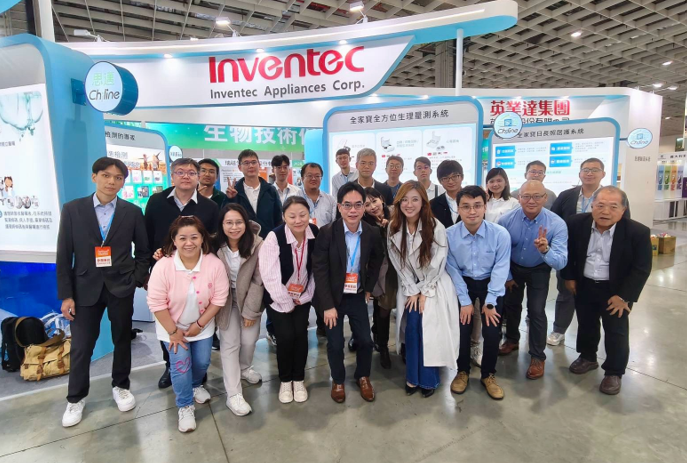
As for Inventec, it regards AI medical software as a tool for value-added and differentiated hardware. For example, the circulating tumor cells detection machine jointly launched by the company and Good Future and calling for "liquid pathology slides" is equipped with Inventec Appliances, a subsidiary of Inventec, which can use AI to analyze cancer cell detection software in the blood circulation.
The system, which has been developed for six years and has an accuracy of more than 80%, has been introduced by the Pathological Examination Department of Taipei General Hospital. Each test costs about 15,000 yuan, which is at least half cheaper than traditional imported equipment.
Looking at the AI medical business of Electronic Fifth Brother, most of them are still in the stage of not yet making a profit, but for the future, by first obtaining regulatory certification from various countries, then promoting it at the hospital, and finally expanding the customer scale, this will be the common path for these major manufacturers to "monetize" AI and then make profits.
Source----
"Today's Weekly" Magazine / Issue 1308 / Issued in January 2022