Sample Type
Human whole blood, using K2-EDTA/K3-EDTA lavender-top blood collection tubes.
Review the service scope, report contents, sample requirements, and how to schedule testing.
Before submitting a specimen, please follow the collection, storage, and delivery requirements below.
Human whole blood, using K2-EDTA/K3-EDTA lavender-top blood collection tubes.
For vacuum blood collection, discard the first 3 mL of blood, then collect at least 5 mL in a second tube for testing.
Store at 4°C and ship under refrigerated conditions.
Samples should be collected and delivered to the laboratory within 28 hours.
CTCs shed from the primary tumor may appear in different phenotypes as they circulate in the bloodstream. Reviewing both phenotypes is therefore an essential part of interpretation.
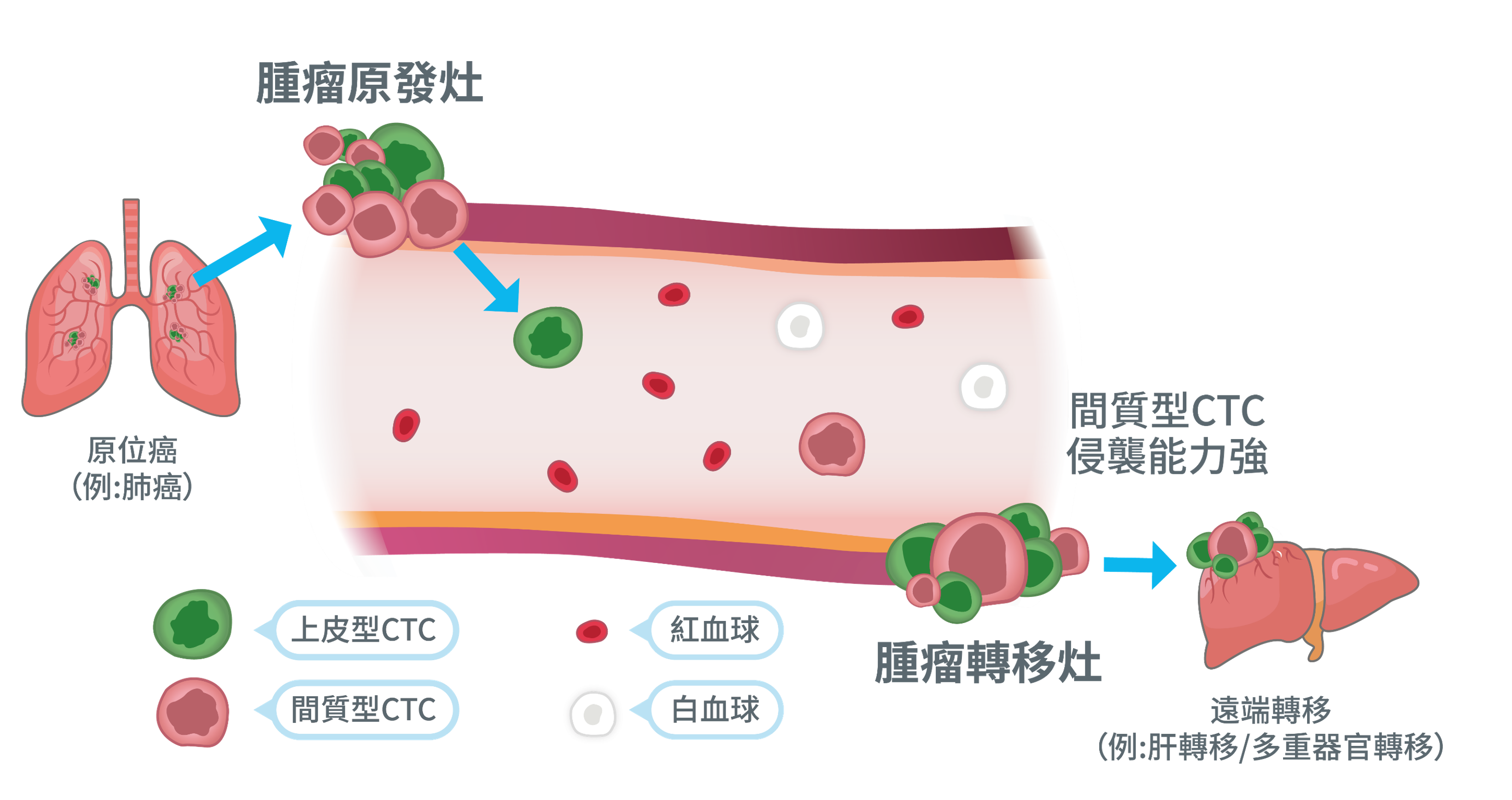
Epithelial CTCs originate from cells shed by the primary tumor into the bloodstream and are one of the key observation types in circulating tumor cell testing.
Mesenchymal CTCs may emerge as tumor cells undergo phenotypic transition. Their migratory and invasive characteristics make them relevant to interpretation and follow-up.
After testing, the report includes the result summary, cell images, and phenotype interpretation information for follow-up reference and discussion.
Reports are typically delivered within 5 business days and focus on the result summary, cell images, and interpretation details needed for review.
If prior test records are available, they can also be organized into a comparison reference to support follow-up review and discussion.
Sample Report
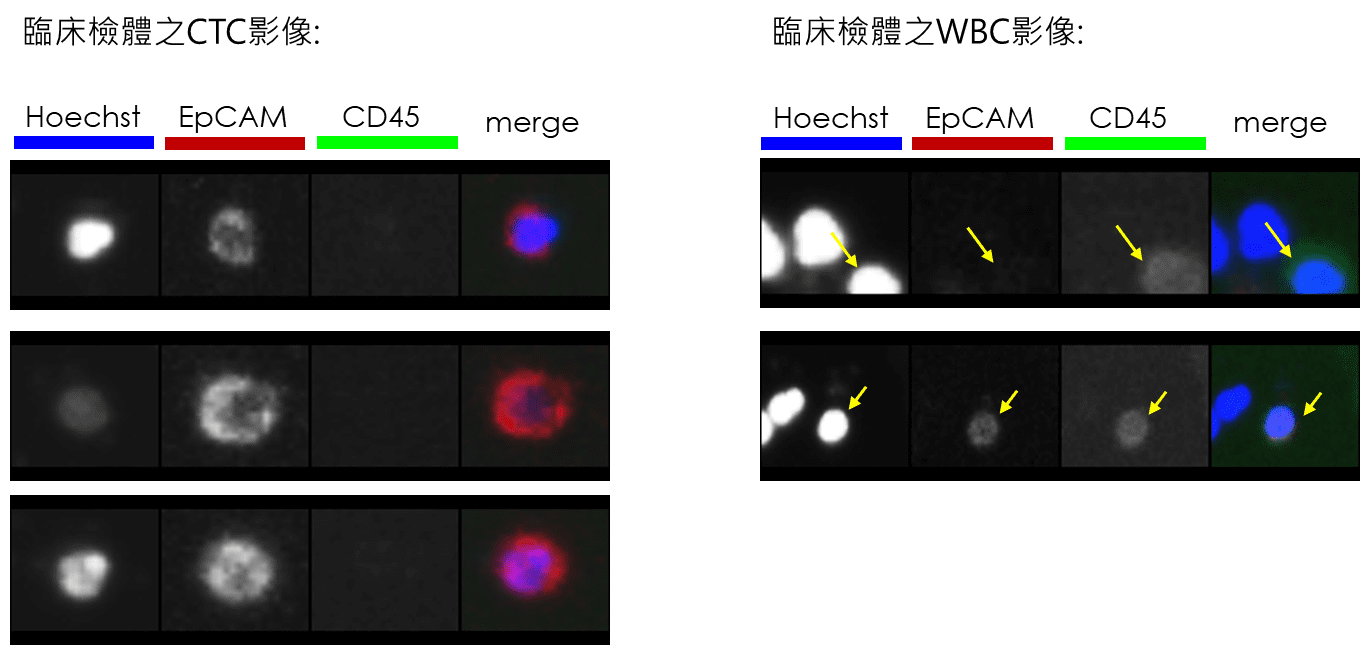
Hoechst: Nucleus imaging helps identify the location and morphology of cell nuclei.
EpCAM: Tumor-cell surface antigen imaging supports identification of cells with epithelial characteristics.
CD45: White-blood-cell surface antigen imaging helps distinguish white blood cells from non-white blood cells.
CTC: Hoechst, EpCAM, and CD45 images are reviewed together to support circulating tumor cell interpretation.